
Chasing Punchlines
Revisiting a Childhood Dream

With the passing of the Dilbert cartoon creator, Scott Adams, earlier this week, I found myself reflecting on an art form that heavily influenced and inspired my childhood. I was fortunate to spend my most impressionable years during a time when two masters of the medium were in their prime: Bill Watterson (Calvin and Hobbes) and Gary Larson (The Far Side).
The work of these eccentric geniuses arrived daily in the paper box at our home. Without fail, I would devour the latest comic, moving slowly through the artwork, studying the minute details hidden within the simple line drawings. I carefully considered the word choices that delivered the punchline to the visuals. I dreamed that my own career path might one day continue their legacies.
In High School, I cartooned for our school newspaper; it was thoroughly enjoyable to watch my classmates read my creative attempts in our weekly publication. Since the paper was passed around in class, I could observe my readers real time. Most of them responded with puzzled looks, but a smirk or even a full-on smile delivered an immense sense of satisfaction.
Ultimately, I chose a more practical (and likely) career path and long abandoned that dream. A few decades later, during a season of challenging and slow business conditions where I felt generally adrift in my career, I undertook a 30-day challenge to create at least one comic per day. It wasn’t about pursuing a potential career change; it was about partially living an old dream.

It proved to be an enlightening experience. I learned how to move through my day actively looking for obscure angles that typically went unnoticed. For me, it required persistent effort to actively reframe mundane life events in order to find inspiration. I also learned that doing something creative you feel passionate about can turn intensely miserable when uninspired days collide with deadlines.
During that month, there were moments I still cherish. These where when I stumbled upon ideas I genuinely appreciated long after. In those moments, it felt as though I briefly transcended into the creative stratosphere where Larson and Watterson dwell. And in those moments, I experienced one of the primary reasons I try any art form at all: to deepen my appreciation for the work of the masters.
Wearing your personality on your tailgate
I found a great deal of inspiration in people broadcasting aspects of themselves on the backs of their cars. Growing up in rural Oregon, folks tended to worry less about the views of others, yet motivated to broadcast their own. This piece was homage to my childhood roots:
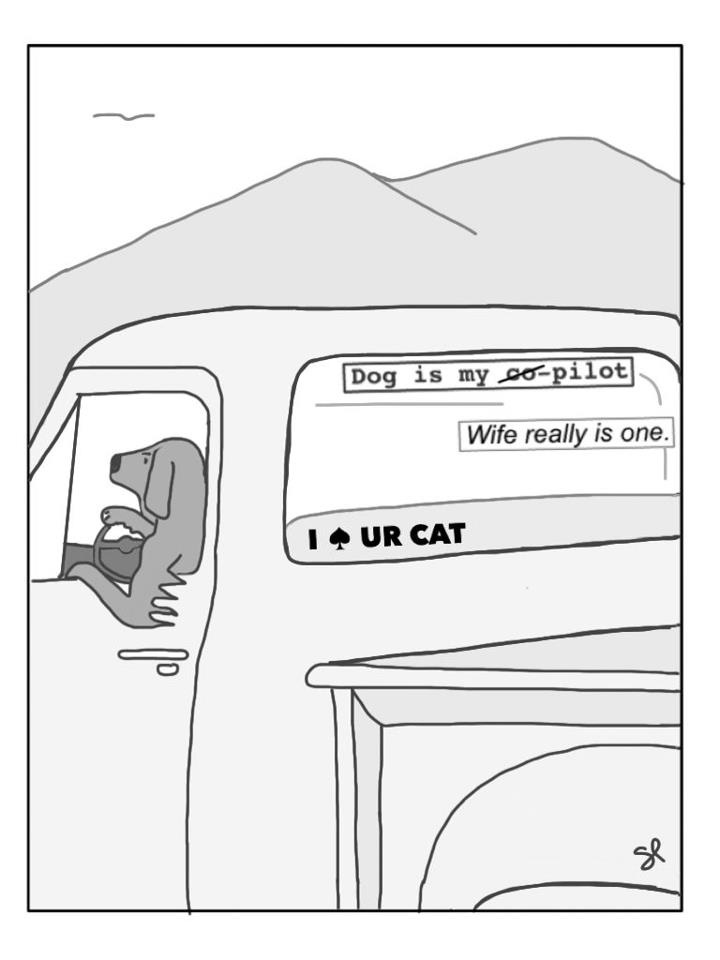
The anthropomorphized hound in his old pickup, arm resting casually out the window, was a nod to a posture reserved for a balmy Oregon summer day. The three bumper stickers drew on three familiar themes of the time. The alteration of a national message encouraging people to “spay your dog/cat” to prevent unwanted animals fit perfectly with how a redneck dog might both ridicule and redirect with his violent tendencies. The spin on the once-common “God is my co-pilot” sticker may feel sacrilegious for a stereotypical redneck, but not in my neck of the woods. And finally, the G-rated message about his wife being a literal bitch landed squarely in the sweet spot of stereotype, a label worn proudly by many local women of my youth.
On a similar theme of people wearing their defining characteristics on bumper stickers, I targeted another still-popular trend with this one:
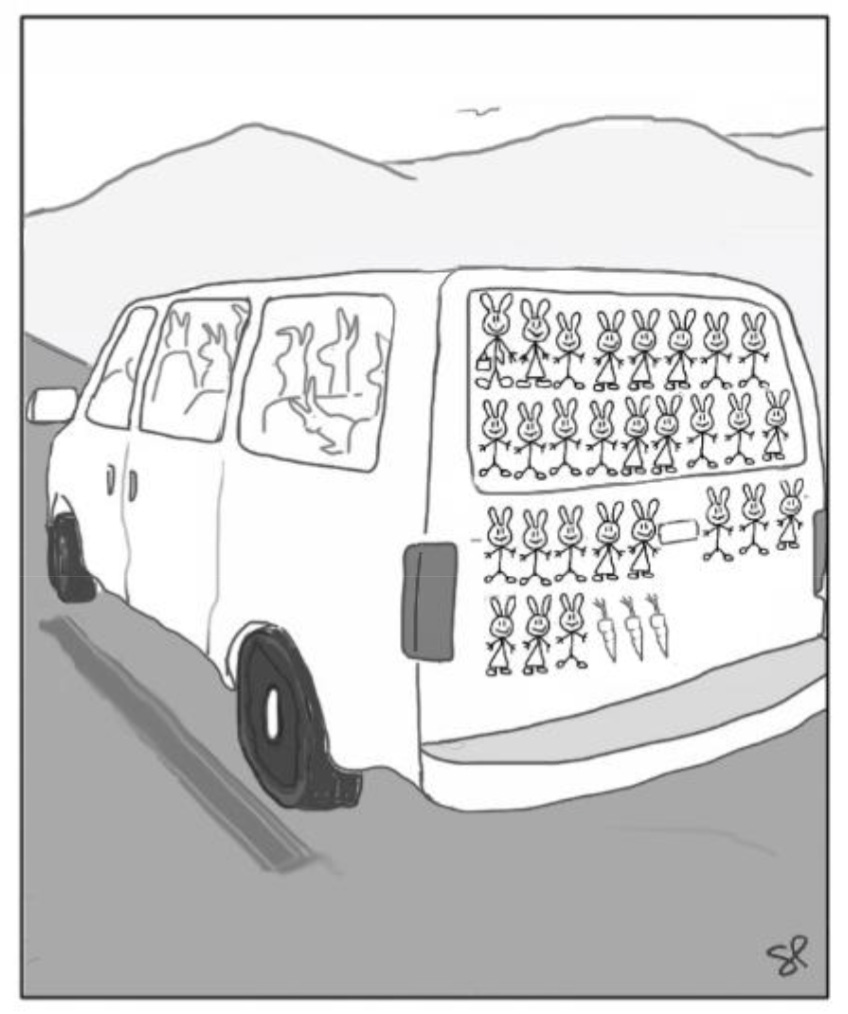
I’ve always found it fascinating when people signal their nuclear family, along with pets, on the back of their vehicles. I still haven’t figured out where those stickers are actually purchased. In any case, the rabbit’s propensity for large litters seemed like the most fitting anthropomorphic translation. Sometime later, I came across a meme featuring a car covered in such stickers with the caption, “OMG, get off her!” I found that meme was far funnier than where this cartoon landed.
Another personal favorite lampooned food labeling:
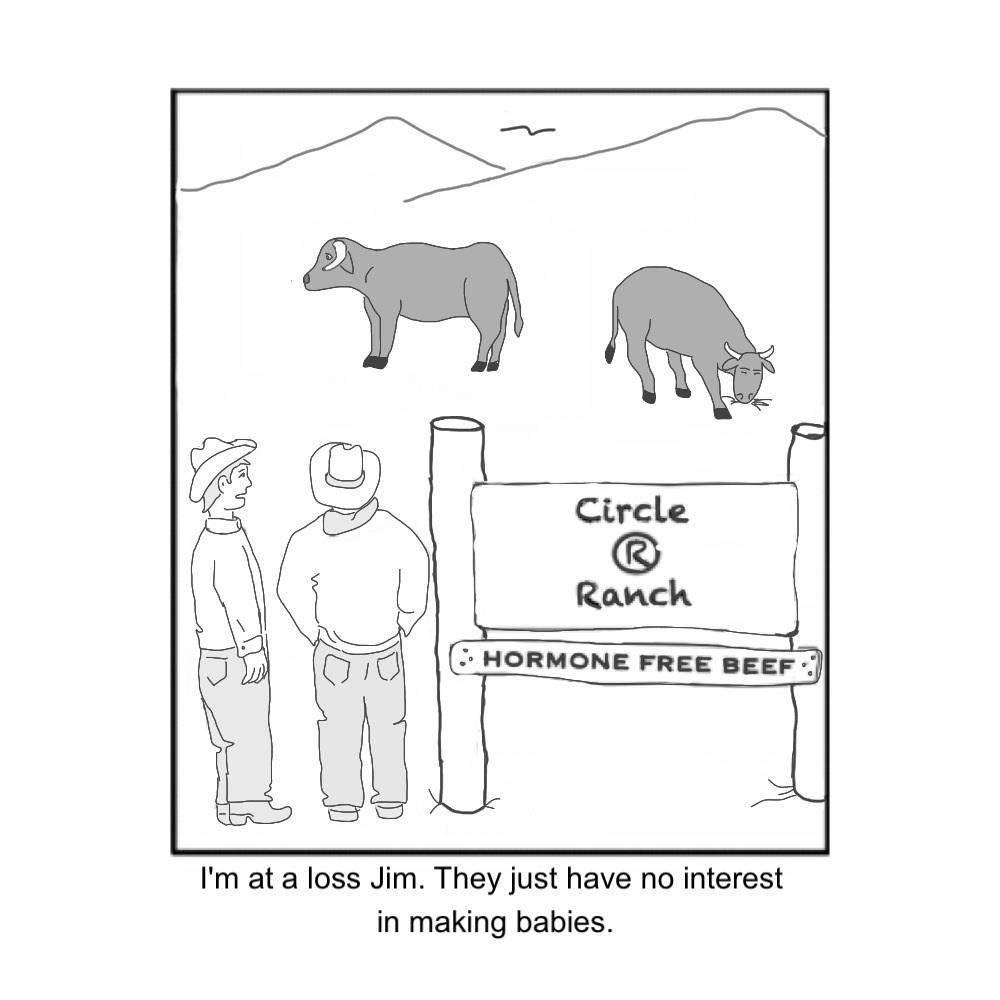
This one took inspiration from Larson’s brilliant “Boneless Chicken Ranch”. It’s far less clever, yet bringing general absurdity of food labeling into focus, in this case this label,


felt an achievement in itself.
Ultimately, the single-panel cartoon format that Gary Larson and The New Yorker contributors have mastered, proved immensely challenging. Delivering context, character, and punchline in a single frame is no small feat. Yet the invention of the meme, a close relative of the single-panel comic, has enabled crowdsourcing some truly brilliant contributions to this art form.
Four Panel Stories
I later attempted the three-to-four-panel format that Watterson mastered, the comic artform. His true depth was best experienced in the Sunday editions, which featured color and often nine panels. Watterson’s humor was intelligent yet widely relatable. He understood the full range of human emotion and worked hard to present that range through deceptively simple drawings.
He presented the world through a child’s eyes, but with adult awareness of human absurdities. His style deviated from most cartoons featuring children, such as The Family Circus, which preserved childhood innocence in its characters - and thus struck me as boring. The children in Watterson’s strips adopted cynicism typically reserved for those with far more life experience. It was this juxtaposition, childish reasoning paired with adult-level wit, that made the work so brilliant - but also delicate. Perhaps his greatest feat was making that premise as the main feature work at all.
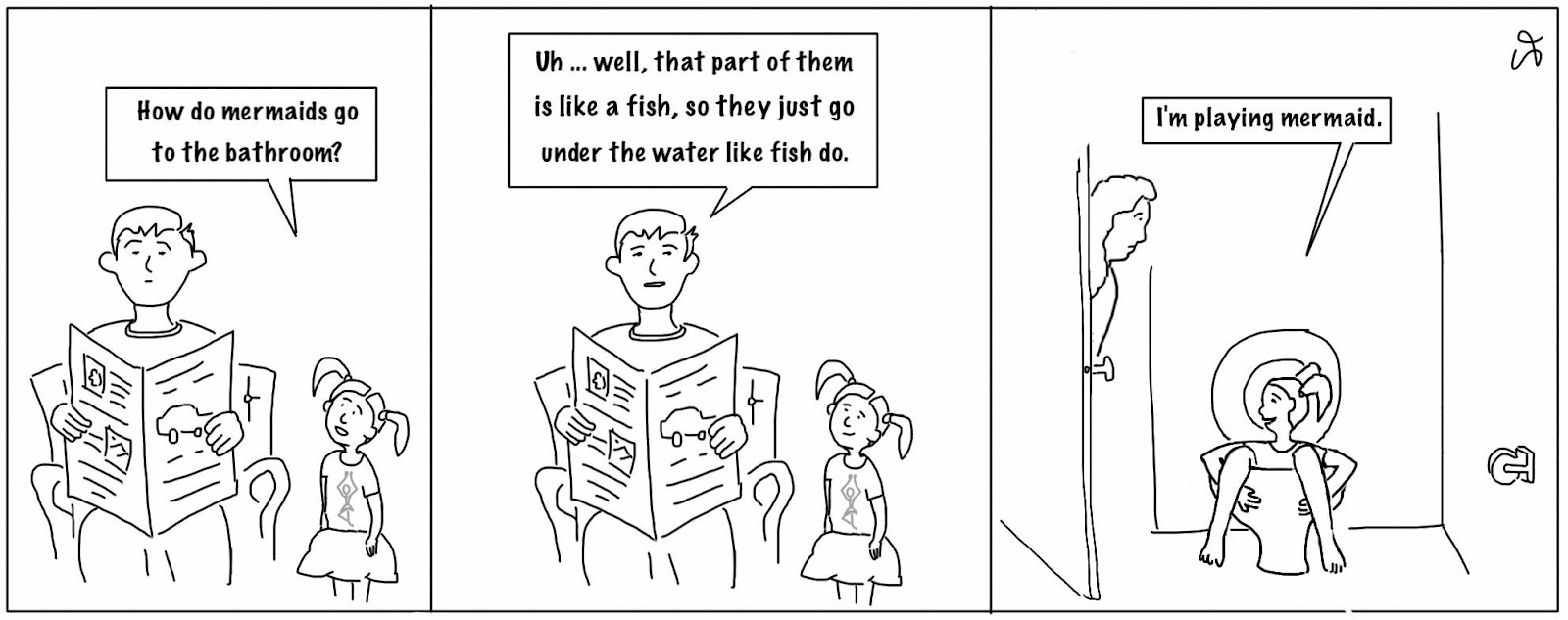
The comic art form often leverages character development for ongoing stories. As a rookie father at the time, I was regularly observing my children’s comical interpretations of the world around them. My attempts in this space often felt like I was merely making sentimental memorials, which was definitely true. The stories themselves were often simply about the relatable trials for most new parents. However, once in a while an inspiration would elevate into the unexpected, which all good humor requires.
The Effort of Seeing Differently
After I stopped actively searching for humorous angles suitable for a cartoon or comic, I simply stopped noticing them. I had hoped that deliberate practice might eventually lead to a subconscious flow where inspiration would strike automatically, but that subsequently rarely happened. For me, consistently seeing the world outside a normalized box requires active mind alteration. Loving the art form was one thing; possessing the innate gifts to contribute meaningfully was another.
At one point, I met someone who knew Gary Larson personally, before he was famous. To no surprise whatsoever, he described Larson as “a very weird dude”, and not social. In one of his rare interviews, you get a sense of his uniqueness. Bill Watterson was also famously antisocial. Larson never had children that might also experience the ‘monster in the basement’ fears that inspired many of his pieces. Watterson waited until he ended Calvin and Hobbes at 38 to have a daughter. Perhaps the mental space required to deliver ongoing creative genius is simply all-consuming.
Most importantly, my comics left a few persistent breadcrumbs for my children to understand their father, and how I made (non)sense of the world we live in. Now that is a worthwhile endeavor.
Well, Steve, I thoroughly enjoyed reading this, and you've given me a deeper appreciation for the "comic" art form! Our kids and grandkids have loved Calvin and Hobbes, and The Far Side. Maybe that explains the grandkids' fear of descending into the basement! I always found The Simpsons amusing, but had some concerns that children would adopt their disrespectful attitudes.
The world can always use more humor...go for it!